


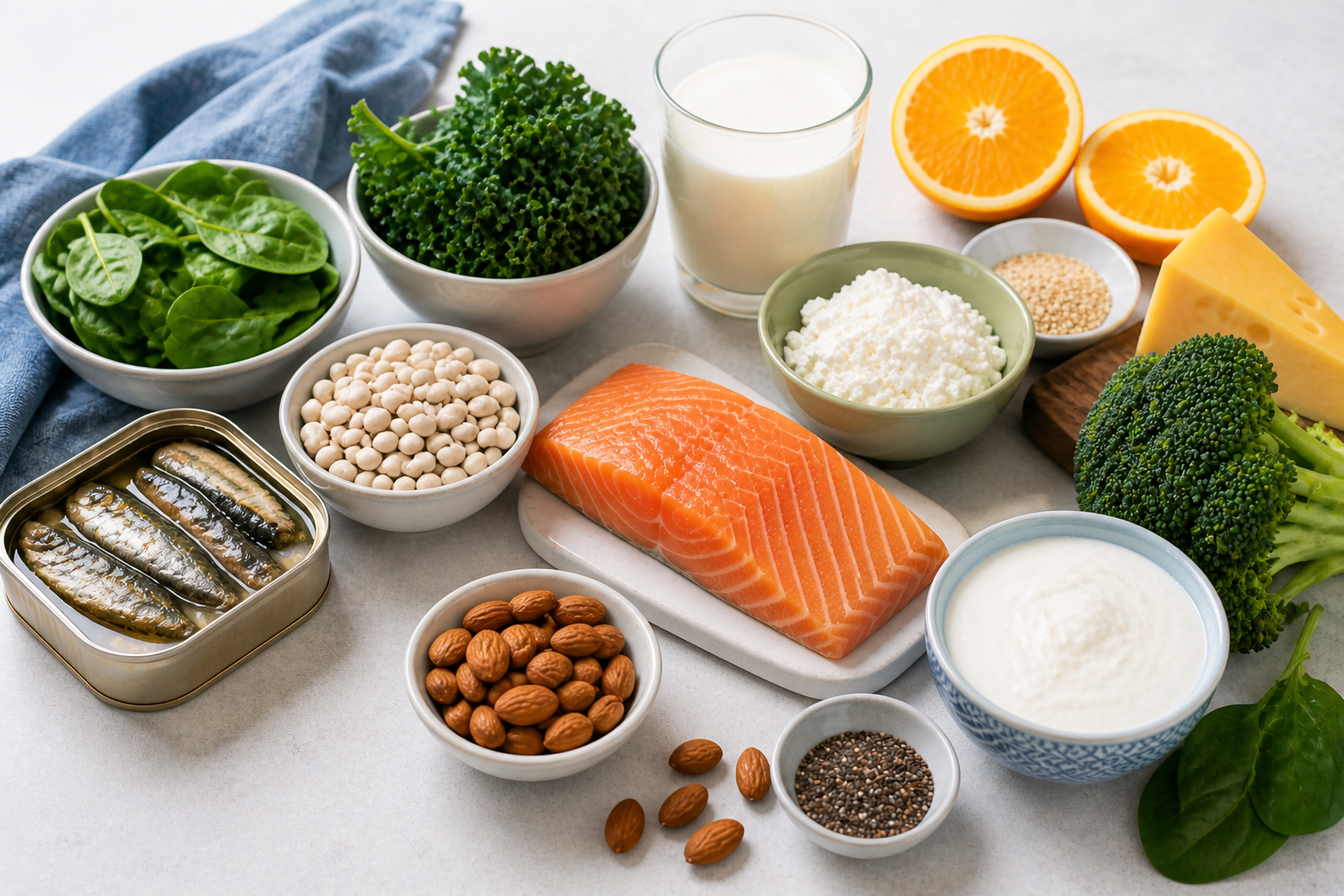
La bonne santé osseuse commence dans votre assiette.
Vous n'avez pas besoin d'un régime alimentaire compliqué. Il vous suffit de savoir quels aliments font double emploi pour votre squelette — et de prendre l'habitude de les privilégier un peu plus souvent.
En matière de santé osseuse, trois nutriments font le gros du travail.
Le calcium est l'élément constitutif de vos os. Votre corps puise constamment du calcium dans vos os et le reconstitue — et lorsqu'il ne peut pas le reconstituer assez rapidement, une perte osseuse se produit. La vitamine D est ce qui rend cette reconstitution possible ; sans elle, votre corps ne peut pas absorber correctement le calcium, quelle que soit la quantité que vous consommez. Et les protéines sont souvent négligées dans les conversations sur la santé osseuse, mais elles constituent environ un tiers du tissu osseux et jouent un rôle clé dans le maintien de la solidité des os et leur réparation après un stress.
Visez 3 à 4 portions d'aliments riches en calcium chaque jour. C'est plus facile à atteindre qu'il n'y paraît.
Le lait, le yaourt et le fromage restent parmi les sources de calcium les plus fiables disponibles. Un verre de lait de 250 ml apporte environ un quart des besoins quotidiens de la plupart des personnes âgées. Le yaourt en fournit souvent encore plus, et il a l'avantage supplémentaire de soutenir la santé intestinale, ce qui favorise l'absorption globale des nutriments. Le fromage fonctionne aussi, même en petites quantités — une petite quantité suffit.
Si vous êtes intolérant au lactose, il vous reste des options. Les produits laitiers sans lactose ont la même teneur en calcium, et beaucoup de gens trouvent que le yaourt et les fromages affinés sont plus faciles à tolérer.
Tout le monde ne sait pas que certains légumes sont étonnamment riches en calcium. Le chou frisé, le chou cavalier et le bok choy figurent parmi les meilleures sources végétales. Le chou cavalier en particulier se distingue — une tasse cuite apporte plus de calcium qu'un verre de lait. Ces légumes sont également riches en vitamine K, qui joue un rôle de soutien dans le métabolisme osseux.
À noter : les épinards et la bette à carde contiennent bien du calcium, mais ils contiennent aussi des oxalates, qui bloquent l'absorption. Privilégiez le chou frisé, le chou cavalier et le bok choy pour le maximum de bienfaits pour les os.
Les laits végétaux enrichis — amande, avoine, soja — sont souvent enrichis avec autant de calcium que le lait de vache, et beaucoup contiennent également de la vitamine D ajoutée. Les céréales et le jus d'orange enrichis peuvent compléter votre apport sans effort supplémentaire. Vérifiez simplement l'étiquette ; toutes les marques ne se valent pas, et les niveaux d'enrichissement varient.
Ceux-ci sont particulièrement utiles pour les patients qui ne consomment pas beaucoup de produits laitiers ou qui s'efforcent d'augmenter leur apport global.
Le saumon, les sardines (surtout avec les arêtes) et le maquereau en conserve figurent parmi les rares aliments qui contiennent naturellement des quantités significatives de vitamine D. La plupart d'entre nous ne bénéficient pas d'une exposition au soleil suffisante — surtout pendant les hivers de la Nouvelle-Angleterre — pour produire adéquatement de la vitamine D par nous-mêmes, ce qui rend les sources alimentaires et les compléments plus importants. Les sardines avec les arêtes apportent également une bonne dose de calcium, ce qui en fait l'un des aliments les plus efficaces pour la santé osseuse.
Les amandes sont l'une des meilleures sources de calcium non laitières parmi les noix. Les haricots blancs, les pois chiches et les lentilles apportent du calcium, du magnésium et des protéines à votre alimentation. Ils sont faciles à ajouter aux soupes, salades ou plats que vous préparez déjà — aucune recette spéciale n'est nécessaire.
Répartissez votre apport en calcium tout au long de la journée plutôt que de tout consommer en un seul repas — votre corps l'absorbe mieux en petites quantités. Associez les aliments riches en calcium à la vitamine D lorsque c'est possible. Limitez les apports très élevés en sodium, ce qui peut entraîner une excrétion accrue de calcium par votre corps. Et si vous buvez beaucoup de café ou de sodas, sachez qu'un excès de caféine peut nuire à l'absorption du calcium à long terme.
Des os solides ne se construisent pas avec un seul superaliment ou un changement de régime drastique. Ils se construisent au fil du temps, repas après repas, grâce à de petits choix qui s'additionnent. Ajoutez du yaourt à votre petit-déjeuner. Mettez du chou frisé dans votre soupe. Gardez une poignée d'amandes à portée de main. Ce ne sont pas des sacrifices, mais des investissements pour la vie que vous souhaitez continuer à vivre.
Et comme toujours, apportez vos questions lors de votre prochaine visite. Qu'il s'agisse de votre régime alimentaire ou de vos résultats de densité osseuse, votre équipe soignante Gather Health est là pour vous accompagner.
Envie de continuer à lire ? Consultez notre autre article : Des os solides, une vie saine — Ce que vous devez savoir sur l'ostéoporose et les tests de densité osseuse.
Restez connecté
Recevez les dernières nouvelles de Gather Health — événements, conseils bien-être et actualités de la communauté directement dans votre boîte de réception.
Nous nous soucions de vos données dans notre Politique de confidentialité.
Conseils, astuces santé et les dernières actualités pour vous aider à vivre pleinement votre vie.
June 2, 2026
Bien manger
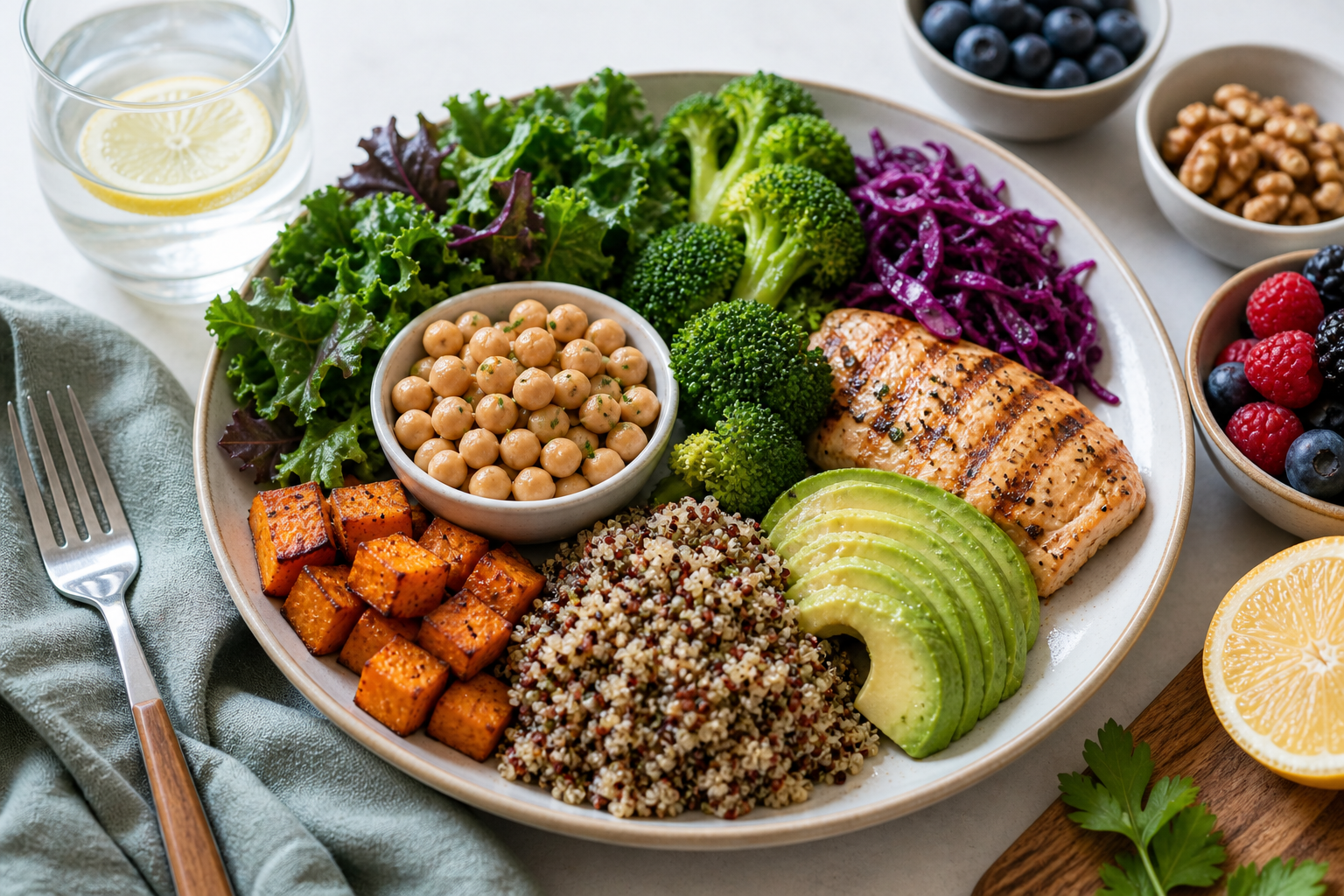
Nous le savons — personne ne s'attend à entrer chez le médecin et à parler de ce qu'il a mangé au dîner. Mais chez Gather Health, nous pensons qu'un véritable accompagnement signifie prendre en compte l'ensemble de votre vie, y compris ce que vous mangez, comment vous bougez et les petites habitudes quotidiennes qui, avec le temps, aboutissent à de grands résultats.


.webp)
De vraies personnes de votre communauté, prêtes à vous aider.
Nous fournissons des soins primaires qui vous permettent
Sentez-vous comme chez vous. Dédié aux adultes de 65 ans et plus.


Obtenez des conseils de santé utiles, des événements à venir et des mises à jour auprès de votre centre de santé Gather local.